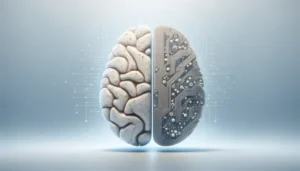
Nanoscale AI Chip for Fiber Optics: Revolutionizing Data Processing
A nanoscale AI chip uses nanotechnology to create components measured in nanometers, enabling unprecedented computational precision and speed.
This chip revolutionizes AI by processing information with light waves, drastically reducing energy use and boosting processing speeds beyond traditional electronic chips.
By integrating silicon photonics and nanoscale fabrication, the chip offers a path to commercial AI accelerators with faster, energy-efficient neural computations.
What is the nanoscale AI chip and why is it revolutionary?
The nanoscale AI chip is a microchip built on the nanoscale, employing light rather than electrons to perform AI tasks at incredible speeds and low energy.
This innovation offers breakthroughs in AI processing by enabling light-speed communication and computation, overcoming limits of conventional silicon chips.
How does this chip improve AI processing compared to conventional methods?
It achieves much faster data transmission, reaching speeds up to 1,000 Gbps via optical methods, far surpassing traditional electronic chips.
Additionally, it requires significantly less power and integrates more transistors densely, enabling powerful AI computation in a compact size.
Key features enabling ultra-efficient and high-speed AI computations
Features include nanoscale transistors and neuromorphic hardware that mimic brain efficiency, enabling real-time AI processing with low latency.
Optoelectronic circuits perform calculations at light speed, while 3D nano-integration and in-memory computing boost efficiency beyond conventional designs.
Advancements in AI Conversational Models with GPT-4.5
GPT-4.5 marks a leap in AI conversation, enhancing understanding and communication with improved context handling and emotional nuance.
This model maintains longer dialogue coherence, reduces hallucinations, and interprets tone and cultural cues more effectively for natural interaction.
Its upgraded capabilities offer richer, more trustworthy conversations, supporting diverse complex dialogues and creative problem-solving needs.
Improvements in contextual understanding and nuanced communication
GPT-4.5 excels at tracking long conversations with better memory retention, enabling coherent and relevant multi-turn dialogues.
It accurately understands tone, sentiment, implied meanings, and subtle instructions, supporting complex reasoning and nuanced responses.
Enhanced safety, emotional intelligence, and scalability
Advanced alignment techniques reduce harmful or biased outputs, with robust content filters and uncertainty detection for safer use.
The model displays refined emotional intelligence, creating more human-like, empathetic interactions across scalable professional applications.
Multimodal capabilities and ethical AI development focus
GPT-4.5 supports multimodal input with text and image understanding, paving the way for future audio and video integration.
Ethical AI features include mitigation of prompt injection, improved refusal of harmful requests, and adaptive safeguards against misuse.
GPT-4.5 as a step toward more natural and complex AI-human interactions
This version enhances conversational naturalness and emotional depth, supporting extended interactions and complex task workflows.
Though not built for deep reasoning, GPT-4.5 lays the groundwork for smarter, more intuitive AI collaboration in varied real-world contexts.
Transformations in Healthcare Powered by AI Innovations
AI advances in 2025 enable personalized treatments and continuous patient monitoring, improving health outcomes and care responsiveness.
Innovations accelerate disease detection and drug discovery by leveraging predictive modeling and large-scale biomedical data analysis.
AI integrates into clinical workflows, enhancing decision support and boosting healthcare administrative efficiency significantly.
Personalized treatment and real-time patient monitoring
AI-driven platforms integrate genetic and clinical data to tailor therapies uniquely, minimizing side effects and maximizing treatment efficacy.
Real-time remote monitoring systems track chronic conditions, alerting providers and patients early to prevent complications.
Accelerated disease detection and drug discovery
AI models predict early disease onset and enable rapid diagnosis using imaging and genomic analysis, improving timely intervention.
Advanced AI accelerates drug discovery by identifying novel therapeutic targets and optimizing drug combinations efficiently.
AI-driven clinical decision support and administrative efficiency
Embedded AI tools support evidence-based clinical decisions, reduce cognitive load, and streamline workflow in healthcare settings.
Integration with electronic health records enhances documentation accuracy and operational efficiency while aiding risk prediction.
AI as an Active Research Collaborator
AI is evolving from a simple tool to an active research collaborator, enhancing productivity and enabling deeper human-AI synergy across research fields.
It automates routine tasks, provides insights, and fosters creativity, allowing researchers to accelerate discovery and innovation effectively.
AI’s collaborative role includes bridging interdisciplinary gaps, demanding trust, transparency, and integration within human workflows.
From tool to partner: AI’s dynamic role in research
AI actively contributes to hypothesis generation, data analysis, and workflow automation, shifting from passive support to a research partner role.
Examples include AI platforms assisting clinical report drafting and generative AI acting as a problem-solving lab partner in science education.
Characteristics of AI-human collaboration for innovation
AI excels in data processing and routine tasks, while humans provide creativity, judgment, and contextual understanding, creating a complementary partnership.
The collaboration features iterative workflows, shared decision-making, and multi-agent AI systems tailored to domain-specific challenges for enhanced innovation.
Broader Implications and Future Outlook
2025’s AI breakthroughs accelerate innovation and economic growth, reshaping industries from healthcare to manufacturing with enhanced efficiency.
Emerging AI systems promote new workforce dynamics, demanding reskilling while raising governance challenges around ethics and privacy.
Future AI will embed deeply into society, powering autonomous collaboration and driving transformative change across science and everyday life.